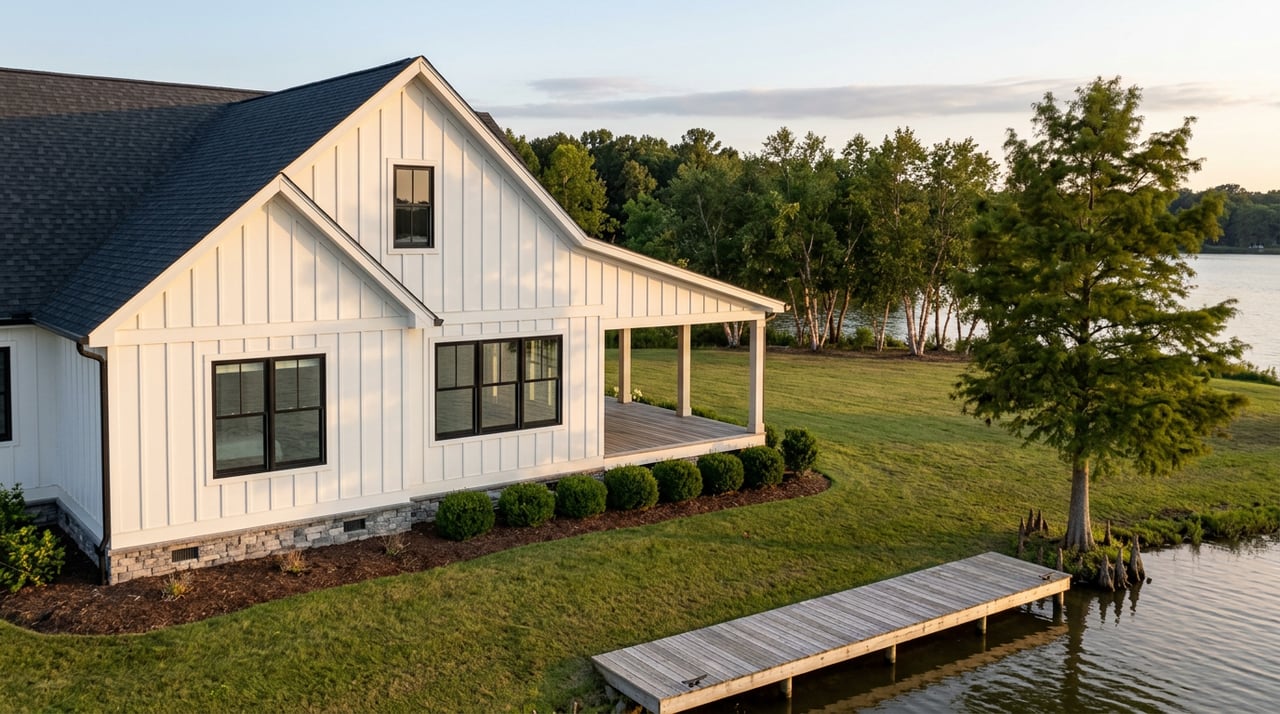
You find the house. Kentucky Lake out the back window, a covered slip at the end of a short walkway, maybe a swim platform bobbing in the shallows. The listing photos sell the dock as hard as they sell the house. You assume that when you sign the closing documents, the dock comes with it the same way the deck or the detached garage does.
It doesn't. Not automatically, and not on the timeline you'd expect.
Why the Dock Isn't Part of the Deed
Every dock, boathouse, or shoreline structure on Kentucky Lake near New Johnsonville sits on land the Tennessee Valley Authority still controls. Section 26a of the TVA Act requires a permit before anyone builds a dock or alters the shoreline, and that permit is tied to the person who holds it, not to the house it happens to serve. When ownership of the property changes, the existing permit doesn't transfer with the sale. The new owner has to apply to TVA directly and get the structure permitted in their own name.
That single sentence is the difference between a buyer who plans a summer around a working dock and a buyer who spends July making phone calls to a regional watershed office instead.
What TVA Actually Requires Before You Can Use It
TVA's own shoreline permitting page lays out two fee categories that matter here:
| Situation | Typical Fee | Processing Time |
|---|---|---|
| New dock or shoreline construction | $500 | Up to 100 days |
| Reissuing a permit to a new property owner | $250 | Up to 100 days |
Both paths run through the same review window. A complete application can take up to 100 days to process, according to TVA. That's longer than most residential closings in Middle Tennessee, which typically run somewhere between 30 and 45 days from contract to keys. If the reissue application doesn't go in until after closing, a buyer can own the house and still be waiting on paperwork.
"Grandfathered" Doesn't Mean Automatic
Older docks on this stretch of the lake are often described as grandfathered, and that word does a lot of work it shouldn't. TVA is direct about what grandfathered actually covers: a dock built under an older set of rules might be allowed to stay in its current footprint, but any change of ownership still requires an application, and any physical change to the structure still requires approval. Grandfathered protects the dock's existing footprint. It does not protect a new owner from needing a permit in their own name.
This is the detail that gets missed most often, because it sounds like the opposite of what it means. A buyer hears "grandfathered" and assumes the dock is settled, permanent, no paperwork needed. What it actually means is the dock's dimensions are settled. The ownership paperwork resets with every sale.
Where This Plays Out on the Water
Pebble Isle Marina sits on Trace Creek off Kentucky Lake at Mile Marker 96.5, tucked into a sheltered cove next to Johnsonville State Historic Park. It's a full-service marina with over 200 slips, a fuel dock, and a seasonal restaurant on the water called the Grey Heron Grill. It's also a good reference point for how private dock ownership works differently than marina slip rental. A slip at Pebble Isle is a lease you renew with the marina operator. A private dock behind a house on Kentucky Lake is a federal permit you carry personally, and it doesn't ride along with the sale the way a marina slip agreement might transfer to a new tenant.
Buyers who've boated out of Pebble Isle or driven past it on Old Johnsonville Road sometimes assume every dock on the lake works the same way theirs does at the marina. It doesn't. The private dock behind the house you're buying is yours to permit, not yours to inherit.
The Other Number That Doesn't Hold Still
If you've pulled up New Johnsonville on more than one real estate portal, you've probably noticed the median price doesn't agree with itself. One portal puts the median home value at $265,000. Another puts it at $216,250. A third, using May 2026 listing data, puts the median list price near $285,000 with a price per square foot around $156, down roughly 4% from the year before.
None of these numbers are wrong. They're just measuring different mixes of a small market in the same breath. New Johnsonville's housing stock ranges from brick starter homes listed under $200,000 a few blocks from downtown to true Kentucky Lake waterfront homes with private docks and deep water access. When a monthly sample includes three inland homes and one waterfront home with a boat lift, the median swings hard depending on which properties happened to close that month. Humphreys County's broader median sits closer to $146,650, which tells you the waterfront premium in New Johnsonville itself is real, even if the exact size of it depends on which portal snapshot you're reading and which properties sold that particular month.
The practical takeaway: don't anchor an offer to a median you found on a portal. Anchor it to comparable waterfront sales specifically, because inland and lakefront properties in this town are close enough in address to blur together in the data and far enough apart in value that the blur matters.
Before You Write an Offer on a Waterfront Property
A few questions worth asking your agent or the seller before you get to closing table logistics:
- Is there an existing TVA Section 26a permit on file for this dock, and is it current?
- Has the dock's footprint changed since that permit was issued, or is it in its original grandfathered configuration?
- Has the seller started a transfer application, or will that step fall entirely on you after closing?
- Does your closing timeline allow for a gap of up to 100 days between taking possession and having a dock permit in your own name?
None of these questions should scare a buyer off a waterfront purchase near New Johnsonville. They should just move the paperwork earlier in the process, ideally into the due diligence period rather than after the sale is final.
A Short FAQ
Can I use the dock while my permit application is pending? TVA's guidance is that any change of ownership requires the new owner to obtain a permit before facilities are considered properly permitted in their name. The safest approach is to start the reissue application as early in the transaction as possible, ideally during your due diligence period, rather than waiting until after closing.
Does this apply to boathouses too, or just docks? Section 26a covers shoreline construction broadly, which TVA describes as including docks, boathouses, and shoreline stabilization work. If the property has more than one structure on the water, each one should be checked against the seller's permit records.
Who do I actually call to check a permit's status? TVA directs property owners and buyers to their Regional Watershed Office for permit-specific questions, and the shoreline permitting page maintains a current FAQ for change-of-ownership situations.
Where This Leaves a Buyer
The house is still worth touring. The dock is still worth wanting. The lesson here isn't caution, it's sequencing. Start the TVA conversation the same week you go under contract, not the week after you move in, and the gap between owning the house and using the dock shrinks from a summer-long inconvenience to a formality you handled early.
If you're weighing a lakefront property near New Johnsonville, or trying to figure out what a listing's dock situation actually means for your timeline, Emerald Key Realty can walk the permit history with you before you write an offer, not after. Reach out to plan your next move on Kentucky Lake with someone who's done this math before.
This article is general information, not legal, tax or financial advice. Consult a qualified professional about your situation.