Thinking about selling land in Stewart County? You are not alone, and you are not imagining it when it feels more complicated than selling a house. With vacant land, buyers tend to focus less on appearance and more on access, boundaries, utilities, septic potential, and how the property can actually be used. In this guide, you will learn what matters most before you list, how to prepare acreage for the Stewart County market, and what local issues can affect your timeline and bottom line. Let’s dive in.
Why land sales work differently
Selling acreage is a different process because buyers are evaluating the land’s function, not a finished home. In Stewart County, that usually means looking closely at road frontage, legal access, easements, boundary lines, topography, utility availability, septic feasibility, floodplain exposure, and any restrictions tied to the property.
That matters even more in a rural county like Stewart County, where the U.S. Census Bureau estimates 14,439 residents spread across 459.78 square miles. The county’s hazard mitigation plan also notes that Stewart County does not have a county zoning code or subdivision ordinance, although Dover and Cumberland City do have zoning. For many unincorporated properties, that makes practical due diligence a big part of the sale.
Stewart County factors to verify first
Access and road frontage
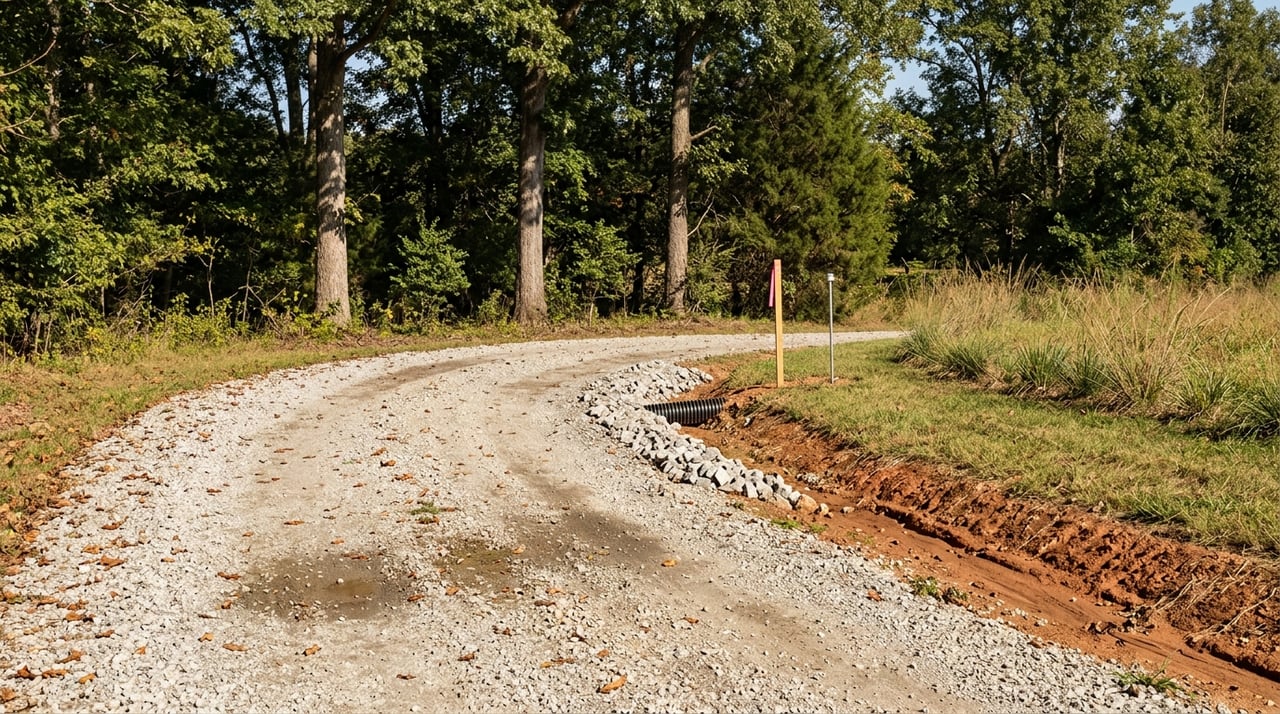
One of the first questions a land buyer will ask is simple: how do I get to it legally? Physical access is important, but legal access matters just as much. If there is an easement, shared drive, or unclear entrance point, it is best to identify that early.
A current survey can help confirm access details, easements, and boundary lines before your property hits the market. That kind of preparation can reduce confusion later and make your listing easier for buyers to evaluate.
Boundaries and legal description
Raw land and older parcels often come with deed descriptions that need closer review than a typical home sale. In Tennessee, as of 2026, a deed conveying property not previously described in a recorded instrument must use a description prepared by a registered land surveyor, or by a licensed attorney using a survey prepared by a registered land surveyor.
This can become especially important if you are selling a newly split tract or acreage with an older, unclear legal description. If your paperwork is not clean on the front end, it can slow everything down at the closing table.
Septic and utility feasibility
For rural land, a buyer often wants to know whether the parcel is actually buildable. If public sewer is not available, septic feasibility becomes a major issue. Tennessee uses the TDEC SSDS construction permit process for septic installation and repair, so a property that needs a septic system may require extra buyer review.
Utilities can raise similar questions. Buyers may ask about water, electric access, and where those services are located in relation to the property lines. If you already have helpful documentation or notes, that can make your listing stronger and your negotiations smoother.
Floodplain concerns
Even though Stewart County does not have a county zoning code or subdivision ordinance, the county does have a floodplain ordinance. That means floodplain awareness still matters, especially for low-lying land, creek frontage, or parcels near water.
If part of your acreage is in a flood-prone area, it is better to address that clearly rather than leave buyers guessing. Clear information helps serious buyers move forward with more confidence.
Greenbelt can affect your sale
If your land is enrolled in Tennessee’s Greenbelt program, that deserves special attention before listing. Agricultural, forest, and open-space land may be assessed by use value instead of market value, which can lower property taxes while the land qualifies.
However, a sale, withdrawal, or change that causes the property to lose qualification can trigger rollback taxes. For agricultural and forest land, rollback generally reaches the prior three years. For open-space land, it generally reaches the prior five years.
Because of that, it is wise to confirm your current classification and understand whether your transfer could affect it. This is one of those acreage details that can catch sellers off guard if it is not addressed early.
Local offices that matter
When you are preparing to sell land in Stewart County, two county offices are especially important. The Stewart County Property Assessor handles parcel and classification questions, including Greenbelt status. The Stewart County Register of Deeds handles recording matters.
According to county information, the Property Assessor is Martha Wallace, located at the Stewart County Courthouse, 225 Donelson Parkway, First Floor, Dover. The Register of Deeds is Derek W. Earhart, also at 225 Donelson Parkway in Dover, Main Floor, with office hours Monday through Friday from 8 a.m. to 4:30 p.m.
How to price acreage realistically
Start with the land’s best use
Acreage should usually be priced around its highest practical use. Depending on the parcel, that could mean a homesite, hobby farm, recreational tract, timber ground, pasture, or long-term investment hold.
That is why land pricing often feels less straightforward than home pricing. The same number of acres can have a very different value depending on access, usable terrain, utility options, and whether the land supports the use buyers want most.
Document what buyers care about
Land buyers want facts they can evaluate. Helpful items can include the deed or legal description, tax map or parcel number, survey if one exists, recorded easements or restrictions, Greenbelt status, and any known information about wells, septic, drainage, or floodplain exposure.
The more complete your file is, the easier it becomes for buyers to do their homework. In many land sales, paperwork quality directly affects buyer confidence.
Preparing your acreage to list
You do not need to stage land the way you stage a home, but presentation still matters. The goal is to make the property easy to understand, easy to access, and easy to evaluate.
Here are a few smart steps before you list:
- Gather your deed, parcel number, prior survey, and any recorded easements or restrictions
- Confirm whether the property is in Greenbelt and whether a sale could affect that status
- Review whether boundaries, road frontage, and legal access are clear
- Check whether septic permitting may be needed for the intended use
- Note any utility information you have available
- Identify possible floodplain concerns before buyers do
- Clean up overgrowth at access points so the property shows more clearly
Marketing land in Stewart County
Vacant land tends to perform best when the marketing is visual, factual, and clear. Buyers usually respond well to aerial photography, drone footage, parcel overlays, road access photos, and concise notes about acreage, frontage, utilities, septic feasibility, floodplain exposure, and restrictions.
That approach fits the Stewart County market well. In a rural area, many buyers begin by asking practical questions about what they can do with the property and how difficult it will be to move forward after closing.
At Emerald Key Realty, that kind of listing preparation matters because rural properties deserve more than a quick upload and a few photos. A polished presentation paired with hands-on coordination can help your land stand out and reduce avoidable questions once interest starts coming in.
What can affect your timeline
Many land sales move based on paperwork and due diligence more than marketing alone. If there are unresolved issues with surveys, deed descriptions, access, septic, title, or Greenbelt, those details can slow a transaction even when a buyer is interested.
If you are splitting acreage, the timeline may also depend on plat approval before recording. Tennessee’s property assessment glossary notes that a plat used to divide land into lots or parcels cannot be recorded until a local planning commission approves it.
In Stewart County, that means your sale may feel simple on the surface but still require careful prep behind the scenes. The smoother your documentation is before launch, the easier it is to keep a deal moving.
Closing costs and transfer tax
One cost that often comes up in Tennessee land sales is the state realty transfer tax. The Tennessee Department of Revenue states that the tax is $0.37 per $100 of value and is paid by the grantee or transferee, with collection handled by the county register.
Like many closing details, this is worth reviewing early so there are no surprises when the deed is recorded. Clear expectations help both sides plan better.
If you are thinking about selling land or acreage in Stewart County, a little preparation can go a long way. When you understand access, boundaries, Greenbelt status, floodplain concerns, and buildability questions before listing, you put yourself in a much stronger position. If you want local guidance, polished marketing, and hands-on support for a rural property sale, reach out to Emerald Key Realty.
FAQs
Do I need a survey to sell land in Stewart County?
- Often, yes. A survey can help confirm boundaries, easements, access, and legal descriptions, which are common concerns in acreage sales.
Do vacant land sellers in Tennessee use the same disclosure forms as house sellers?
- Usually no. Tennessee’s residential property disclosure framework applies to residential property with one to four dwelling units, and vacant land generally does not require the same disclosure report.
Can Greenbelt status affect a Stewart County land sale?
- Yes. If land is classified as agricultural, forest, or open space, a sale or change in qualification can trigger rollback taxes.
What local office helps with Stewart County parcel and classification questions?
- The Stewart County Property Assessor is the main local office for parcel details, classification questions, and Greenbelt-related information.
What local office records deeds in Stewart County?
- The Stewart County Register of Deeds handles deed recording and collects the state transfer tax at recording.
What matters most to buyers of rural acreage in Stewart County?
- Buyers often focus on legal access, road frontage, boundary clarity, septic feasibility, utilities, easements, floodplain exposure, and the property’s highest practical use.